Native American & Alaska Native Resources
Your heritage matters in your healing journey. We connect you to culturally responsive resources and mental health professionals who understand Indigenous communities.
You're not alone

American Indian & Alaska Native youth aged 10-24 have the highest rate of suicide of all demographic groups.1

The prevalence of PTSD among American Indian & Alaska Native populations is estimated between 16–24%.3

Approximately 21% of Native American & Alaska Native experience a diagnosable mental illness each year. 2

Reconnecting with traditional values has been linked to sobriety and recovery in Native American & Alaska Native communities.4
Helpful Resources
StrongHearts Native Helpline
StrongHearts Native Helpline is a culturally-appropriate domestic violence and dating violence helpline for Native American & Alaska Native, available every day from 7AM to 10PM CT.

NAT-SU Healthcare
Behavioral health, clinic, dental, optometry, and on-site pharmacy owned and operated by the Skull Valley Band of Goshutes in Tooele.
Urban Indian Center of Salt Lake
Medical, behavioral, and community health services for Native American & Alaska Native from the eight tribes of Utah who live in the Greater Salt Lake and Wasatch Front areas.
Sacred Circle Healthcare
Primary care, behavioral health, dentistry, recovery, optometry, psychiatry, and more owned and operated by the Confederated Tribes of the Goshute Reservation.
We Are Navajo
Connect with behavioral health services, women’s shelters, and other support in the Utah Navajo region and on the Navajo Nation.
4 Simple Tips
for Mental Health & Wellness For American Indian & Alaska Native and Their Communities

Pause and Breathe
Try this:
- Sit quietly for 5 minutes and focus on your breath
- Practice outdoors when possible—connect to the land
- Do a "body check": notice how each part of your body feels, from your toes to your head
- With others, try breathing together before meals or at the start of gatherings
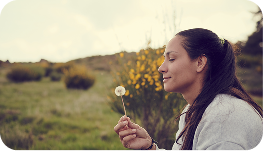

Talk, Share, and Listen
Try this:
- Share stories from elders and ancestors
- Listen without judgment when family members need to talk
- Seek out a counselor or traditional healer when burdens feel too heavy—both are valid paths
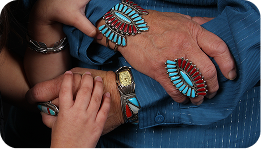

Honor Culture and Ceremony
Try this:
- Participate in available ceremonies (smudging, sweat lodge, prayer circles)
- Learn or teach a tribal language—even a few words strengthen identity
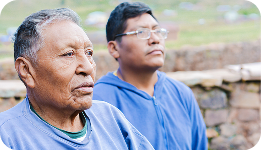
- Spend time with elders and community members

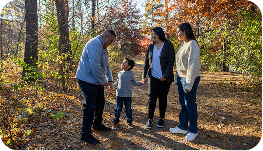
Move Your Body and Rest Your Mind
Try this:
- Walk, dance, or play outside with family
- Try traditional games or activities that keep the body active
- Prioritize sleep—good rest supports a healthy mind
- Balance activity with stillness: after moving, take a quiet moment to reflect
Page Sources
- “Suicide Prevention in Indigenous Communities.” NAMI: National Alliance on Mental Illness, National Alliance on Mental Illness, https://www.nami.org/community-and-culture/indigenous/suicide-prevention-in-indigenous-communities/
- “Understanding Native American Mental Health.” Via Linda Behavioral Hospital, 28 Apr. 2025, vialindabehavioral.com/blog/understanding-native-american-mental-health/.
- Kwon, Sherry C., et al. “Mental Health Challenges in Caring for American Indians and Alaska Natives.” StatPearls [Internet], edited by StatPearls Publishing, Jan. 2025–, National Library of Medicine (US), National Center for Biotechnology Information, https://www.ncbi.nlm.nih.gov/books/NBK570587/
- “Cultural Factors that Protect Against Substance Misuse and Promote Mental Health in American Indian and Alaska Native Populations.” Substance Abuse and Mental Health Services Administration, U.S. Department of Health and Human Services, Oct. 2023, www.samhsa.gov/sites/default/files/resourcefiles/sptac-cultural-factors.pdf. Accessed 25 Feb. 2026.
- Substance Abuse and Mental Health Services Administration. Behavioral Health Services for American Indians and Alaska Natives. Treatment Improvement Protocol (TIP) Series, no. 61, U.S. Department of Health and Human Services, 2018. National Center for Biotechnology Information, www.ncbi.nlm.nih.gov/books/NBK539583/.
- Lafontaine, Jasmine, et al. "Smart Indigenous Youth: The Smart Platform Policy Lab's Land-Based Intervention to Improve Physical Activity and Mental Health—Findings from a Quasi-Experimental Qualitative Study." PLOS ONE, vol. 18, no. 11, 2023, pp. 1–17. PLOS, doi.org/10.1371/journal.pone.0294234.